Giant’s Causeway

It looks like the beginning of the world—from Voices of the Dawn, a description of Giant’s Causeway

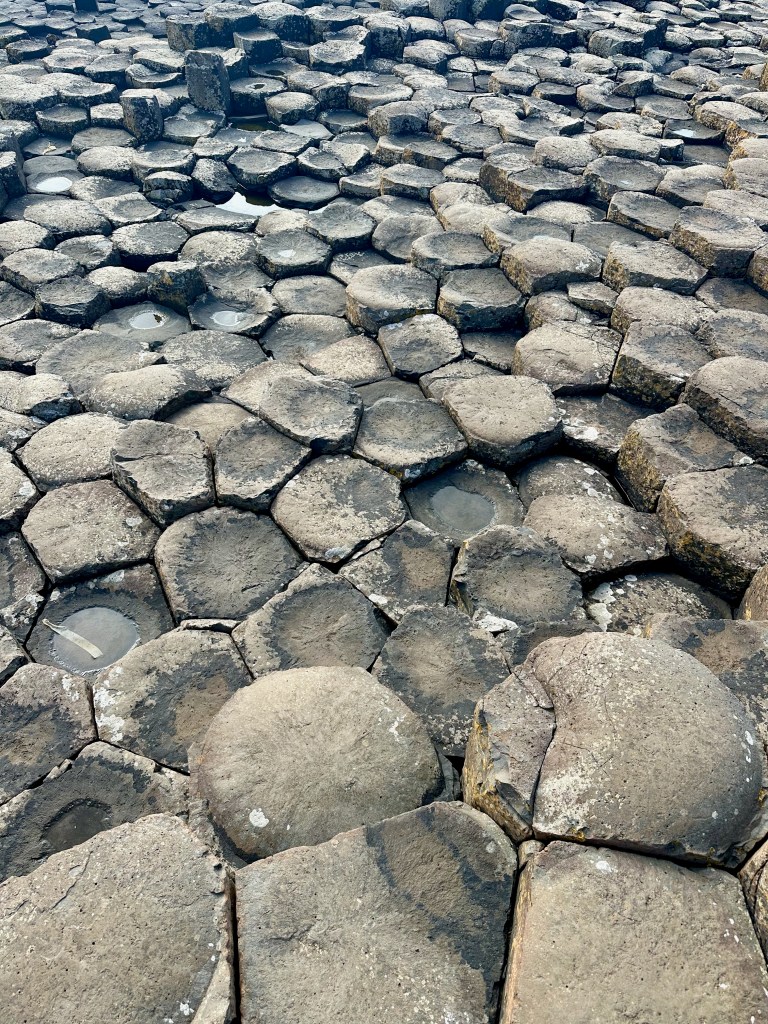
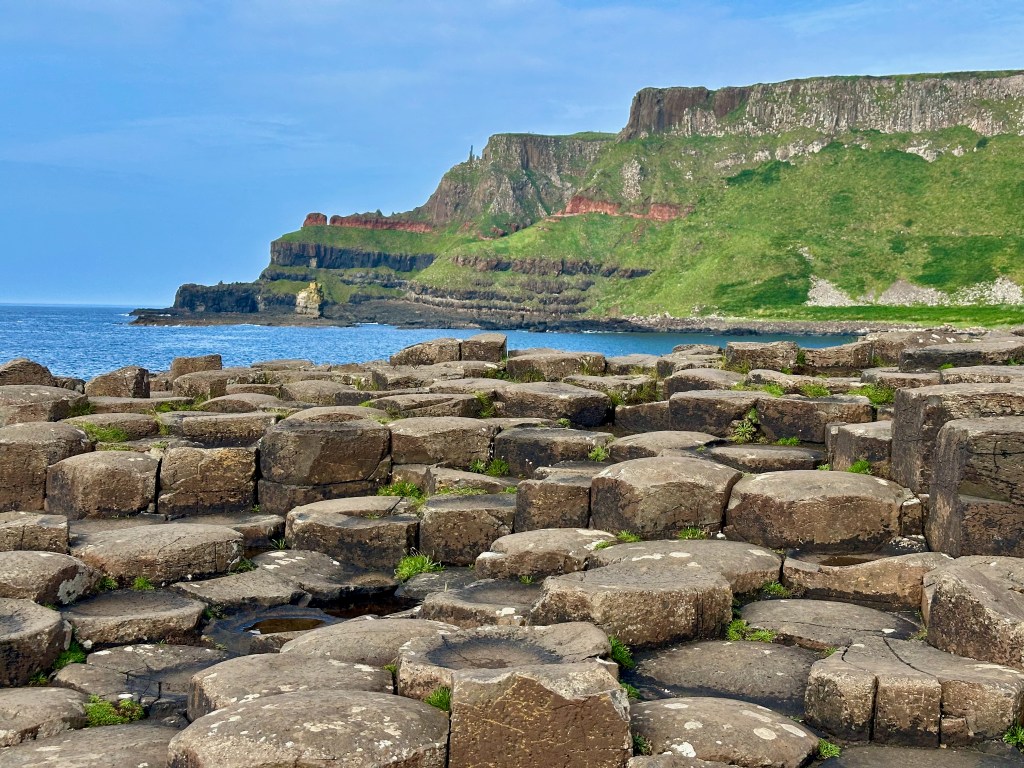
My first thought when I saw Giant’s Causeway; it looked like the ancient ruins of a giant toddler’s Whack-a-mole toy.

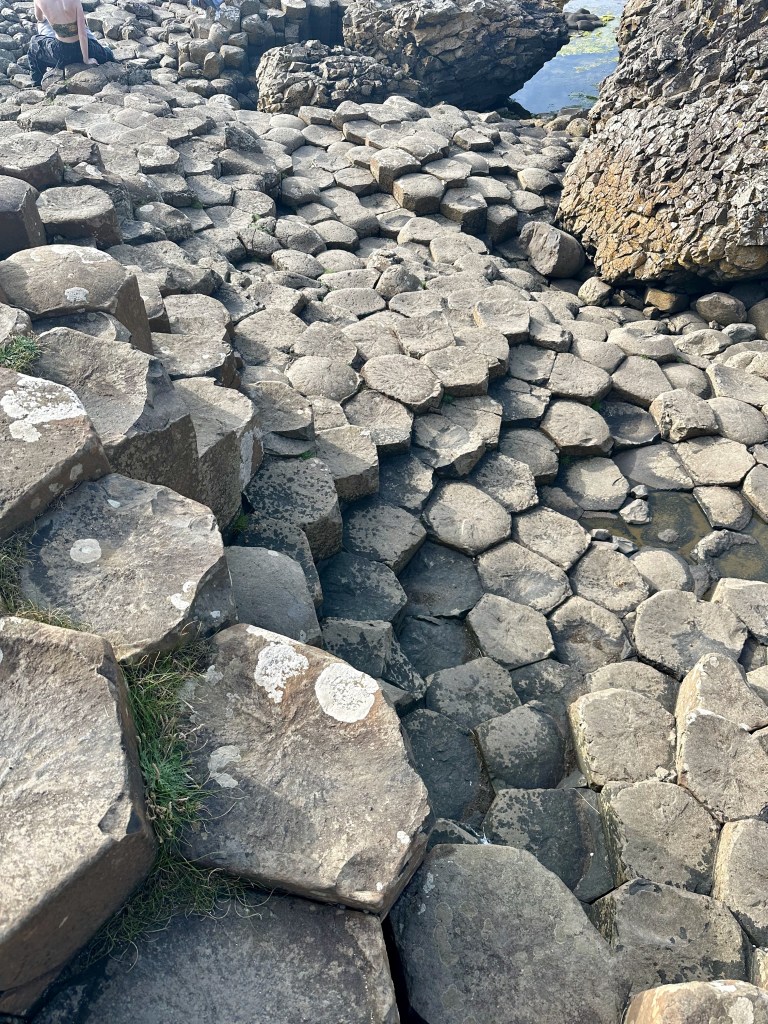
Upon closer inspection, there was no description that I could impart to you. Technically these are basalt columns, that have a hexagonal shape, like they have been put through a pasta maker. You wander how in-all-that-is-scientific could these shapes have been formed in the same pattern.

Science tells us this beach was formed by volcanic lava, 50-60 million years ago. The lava pooled in a large depression and slowly cooled over time and formed these hexagonal columns as it cooled, from the outside to inside. Erosion over time has given us this geological snapshot. Of course Irish lore and mythology has a different origin, thus the name.

Lore has it that there was to be a battle between a giant in Ireland (Fionn mac Cumhaill) and a giant across the sea in Scotland (Benandonner). Fionn built this causeway so the two could meet and battle. The Irish and the Scots have slightly differing versions of the story. But Benandonner fled back to Scotland and destroyed the causeway behind him. If you look at the coast of Staffa across the North Sea, you will also see similar hexagonal formations.

Our invading horde descended upon Giant’s Causeway when we spent a few days in Northern Ireland. Our seven grandkids LOVED exploring these formations. It was a perfect place for them to play and use their imaginations. It helped that they had swords from a previous visit to Dunluce Castle’s gift shop. It was one of the few spots that we never worried they would break something. If Giant’s Causeway has survived 50 million years on the Northern Irish coast and mythological giants, surely it would not succumb to this small army of lads and lassies with wooden armament.
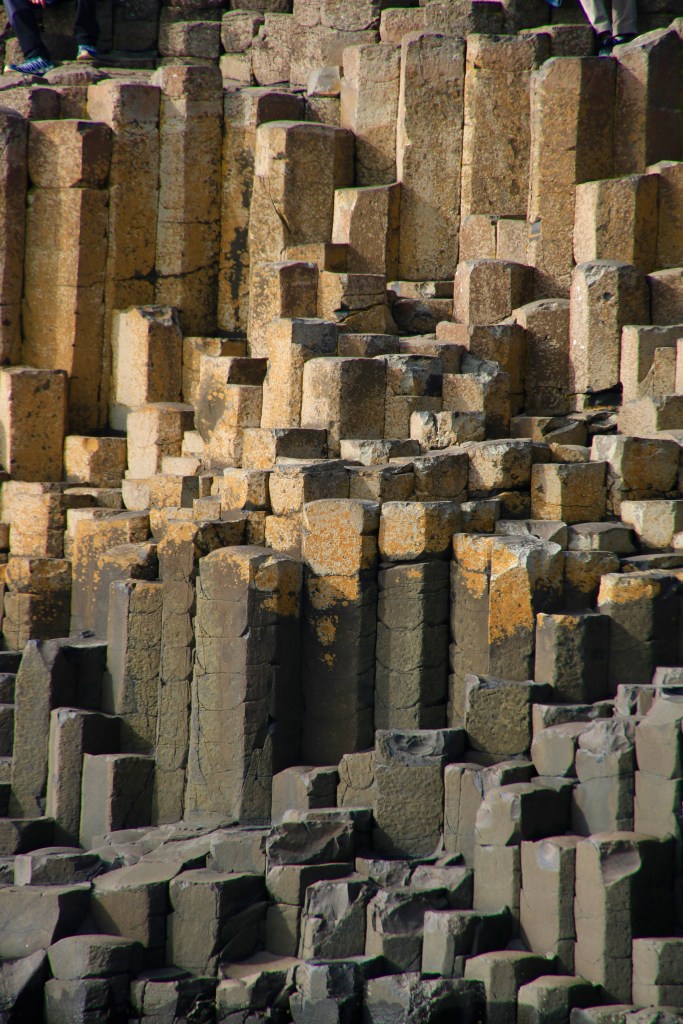
Hexagonal pillars of Giant’s Causeway.
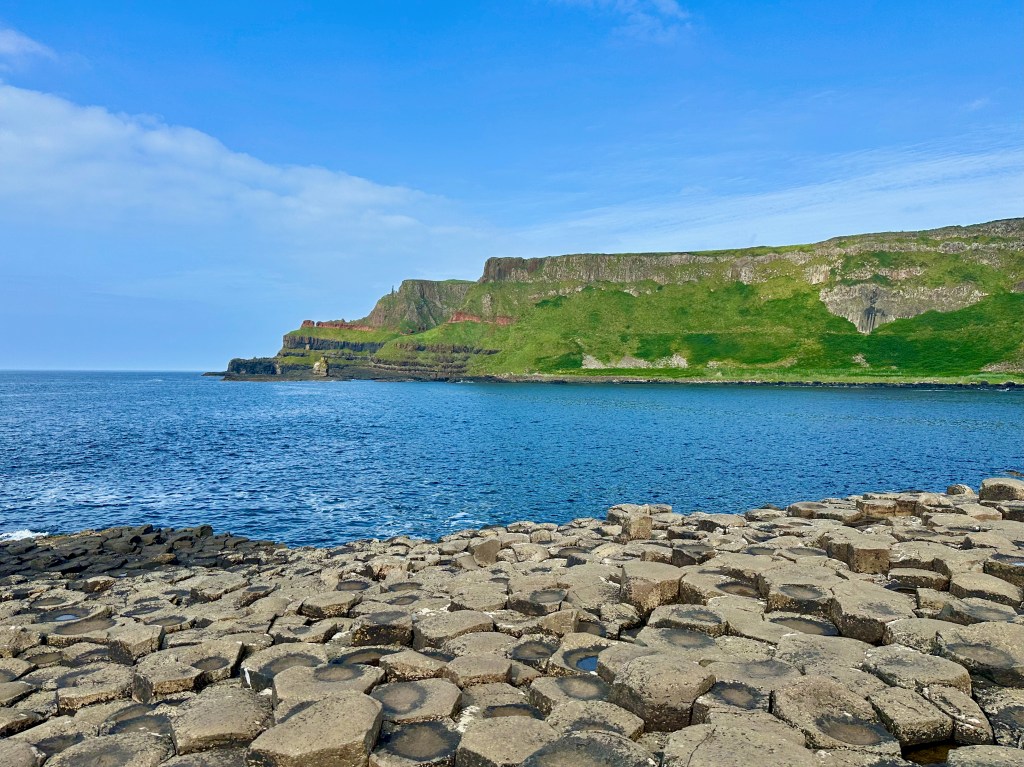
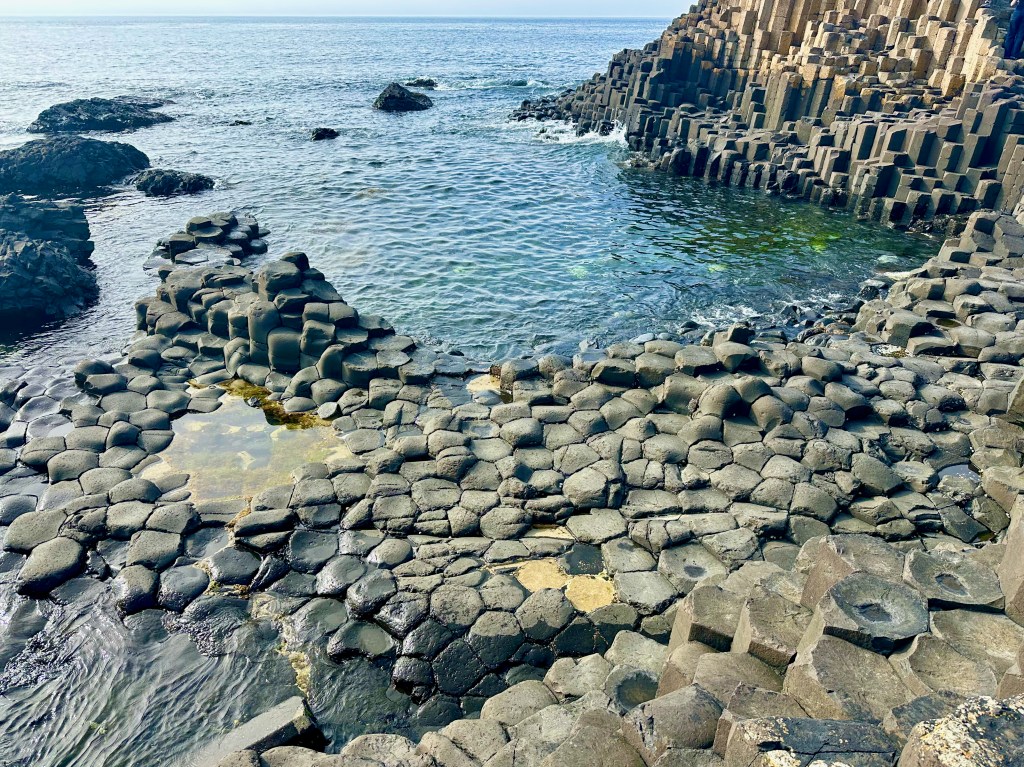
Giants’s Causeway just adds to the myth and lore of ancient Ireland.

On to the the Republic of Ireland.
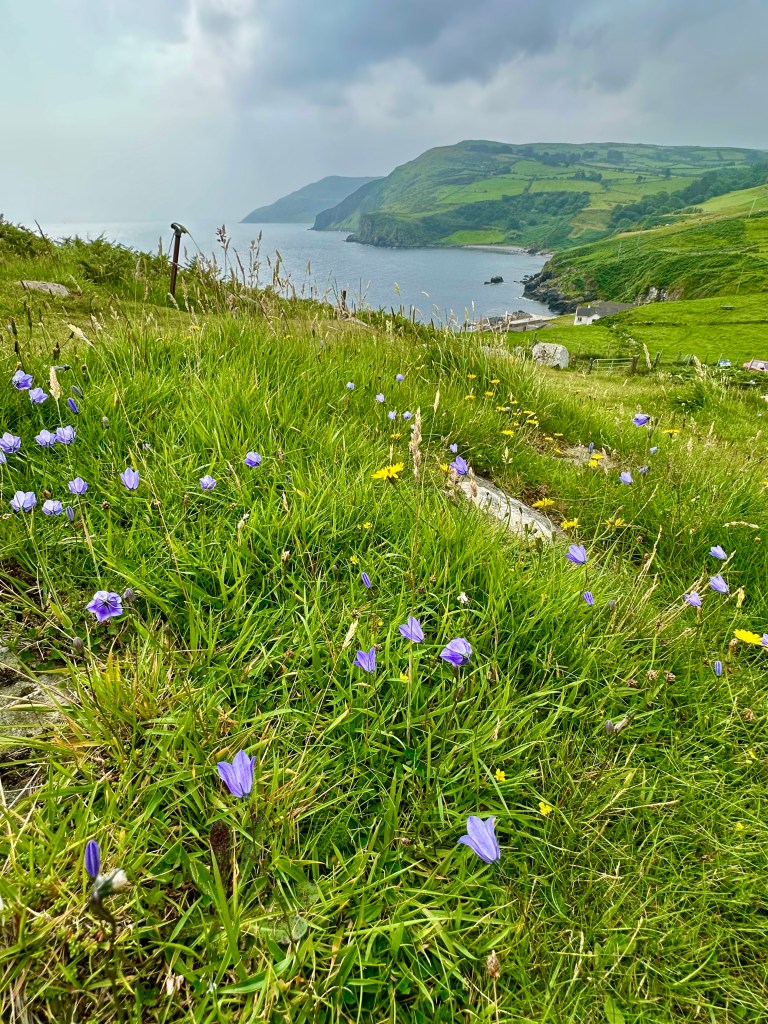
Northern Ireland, a Return to the Homeland

May the best day of your past be the worst day of your future—Irish Toast

The first of my ancestors that rode the waves to America journeyed in about 1745 from Ulster in County Tyrone, in Northern Ireland, to Virginia. I was always told that he came because of the potato famine. He was from Irish and Scottish descent and at the time there was some religious persecution of the Scottish presbyterians from the Church of England and also some interference into the agricultural produce of the Irish and Scottish farmers. So in a sense if the English are commandeering your potatoes, it is a famine… just not in the traditional sense.

The settling of my family into Kentucky was in about 1800, rumor was to open a Dollar General Store in the foothills of the Appalachians. But when he arrived, there was already too many Dollar Generals to compete with so he went back to farming, evidently quite successfully without the “help” of the Brits.

Our family traveled to the old country last summer and spent the first few days in Northern Ireland.

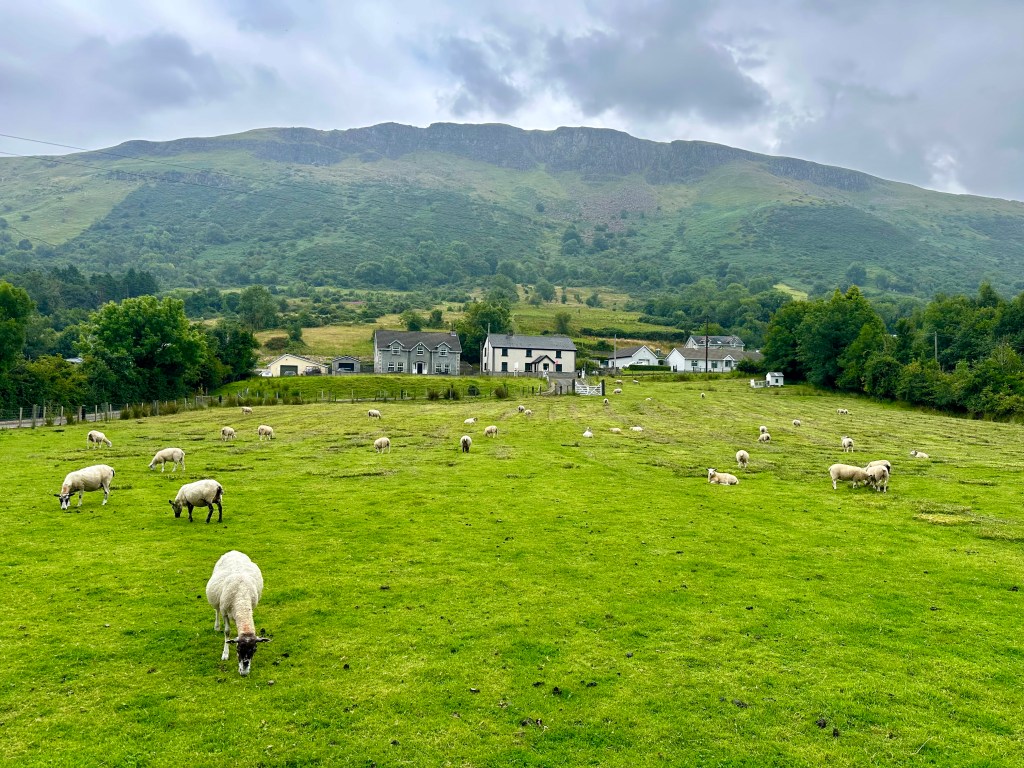
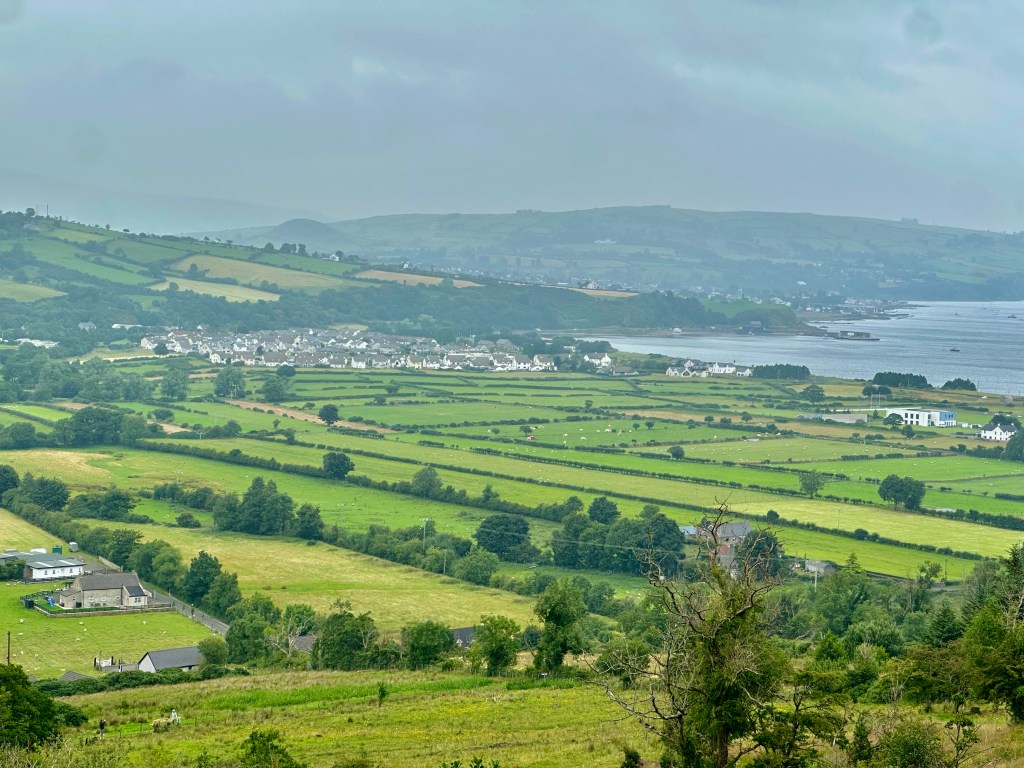
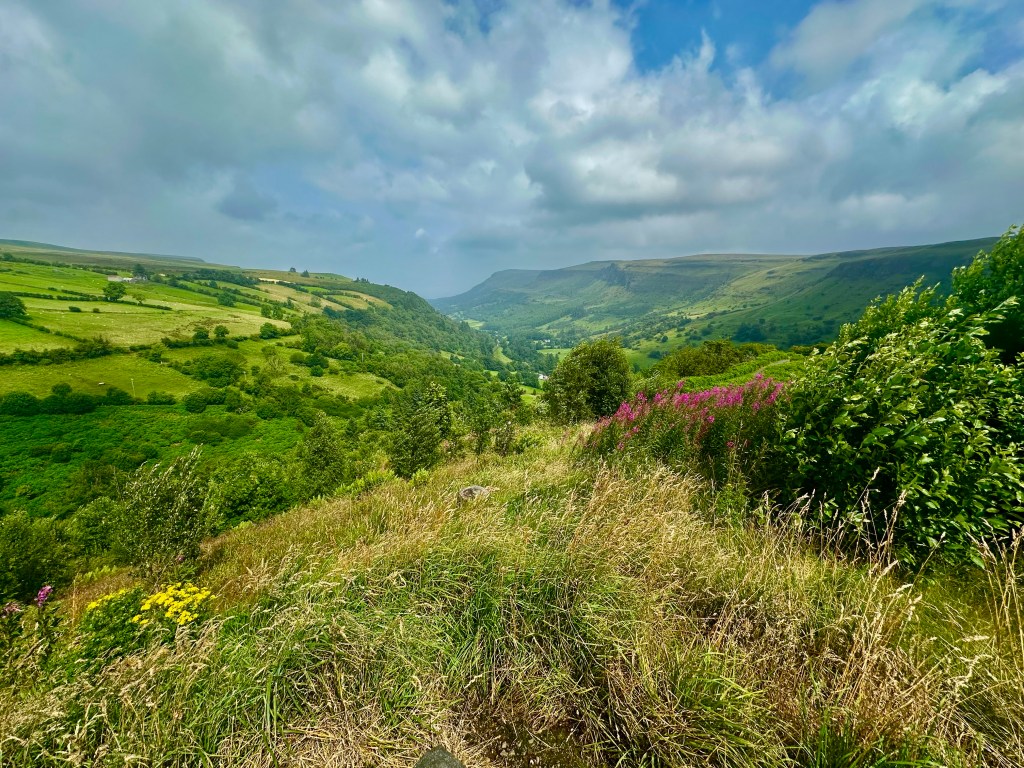
After landing in Dublin, we moved our hoard of thirteen with three small SUVs through Belfast and on up to the small coastal town of Glenariff. This scenic village is located on the Irish Sea, about an hour from Belfast. We stayed in a lovely house on a working sheep farm that our kids loved. Just so you know, the owners were working the sheep farm, not us.

The sheep bleated in the morning just like roosters, but it was an idyllic setting.

The small, coastal village of Glenariff on the Irish Sea.

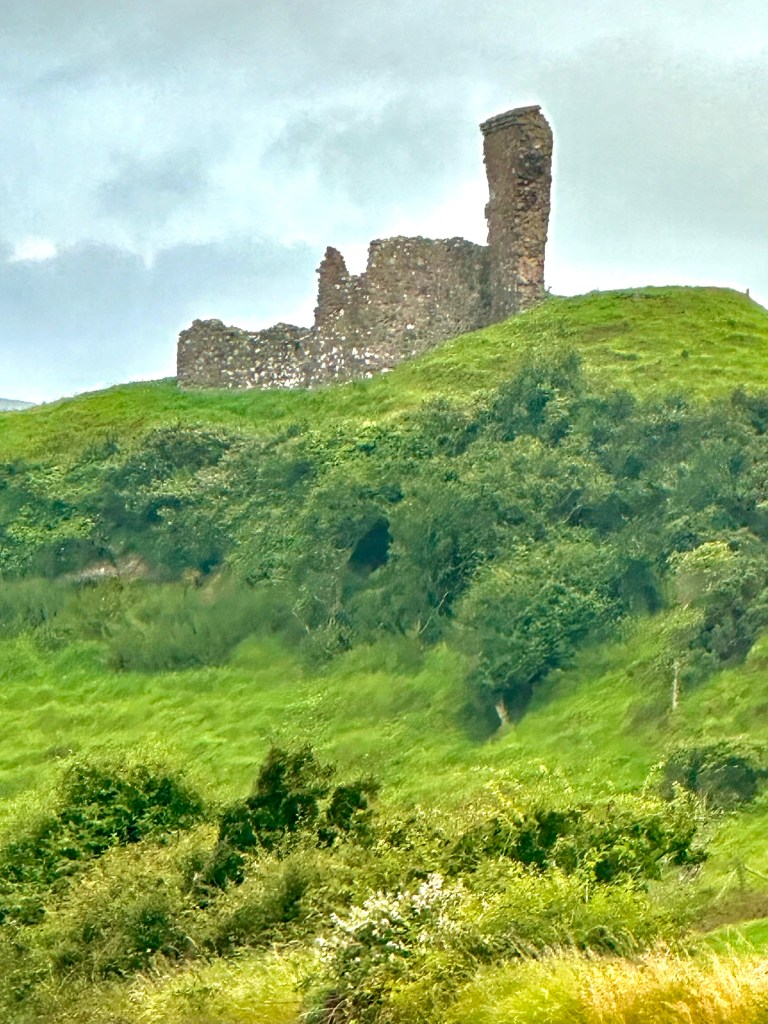
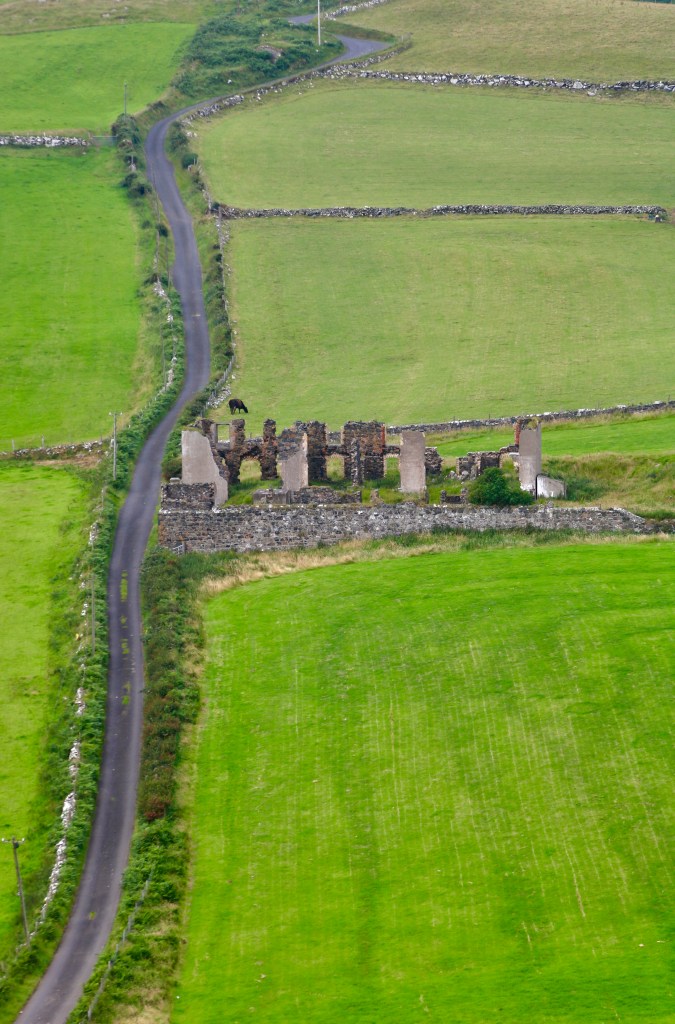
Ancient ruins outside of Glenariff.

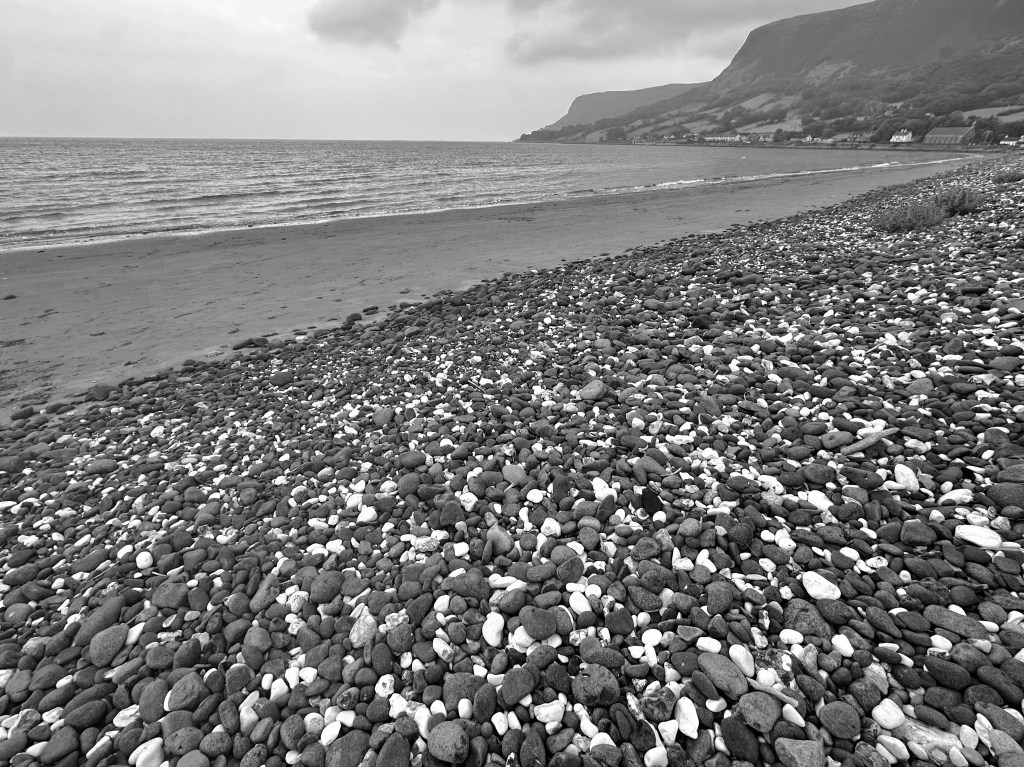
Rocks on Glenariff Beach.

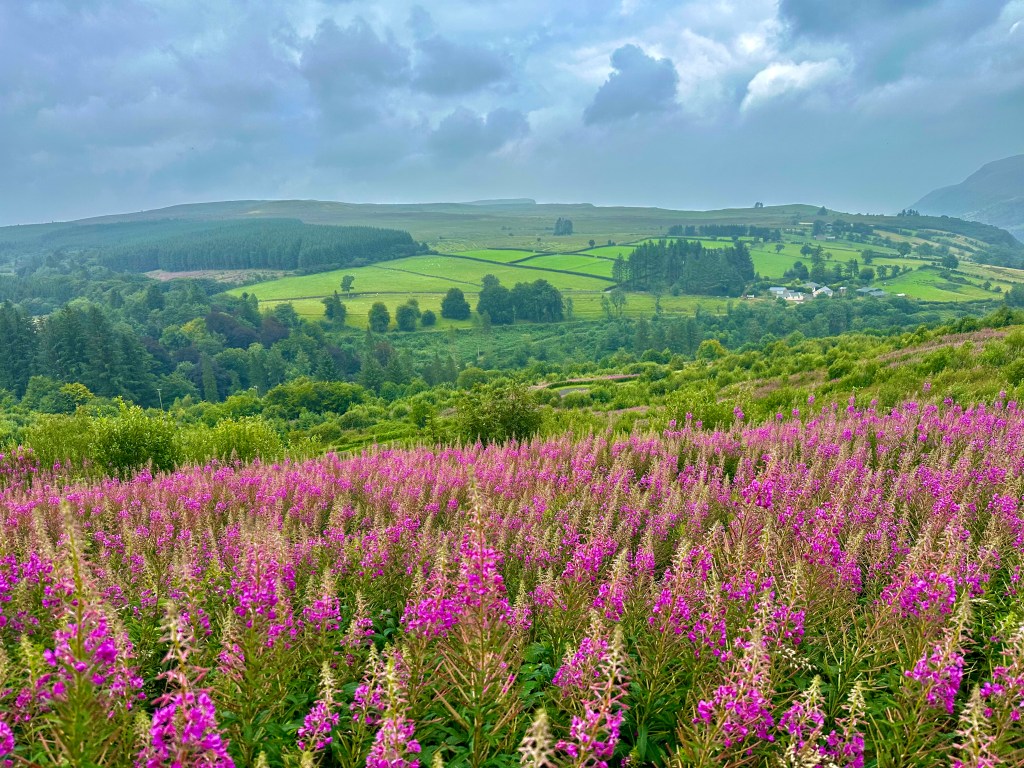
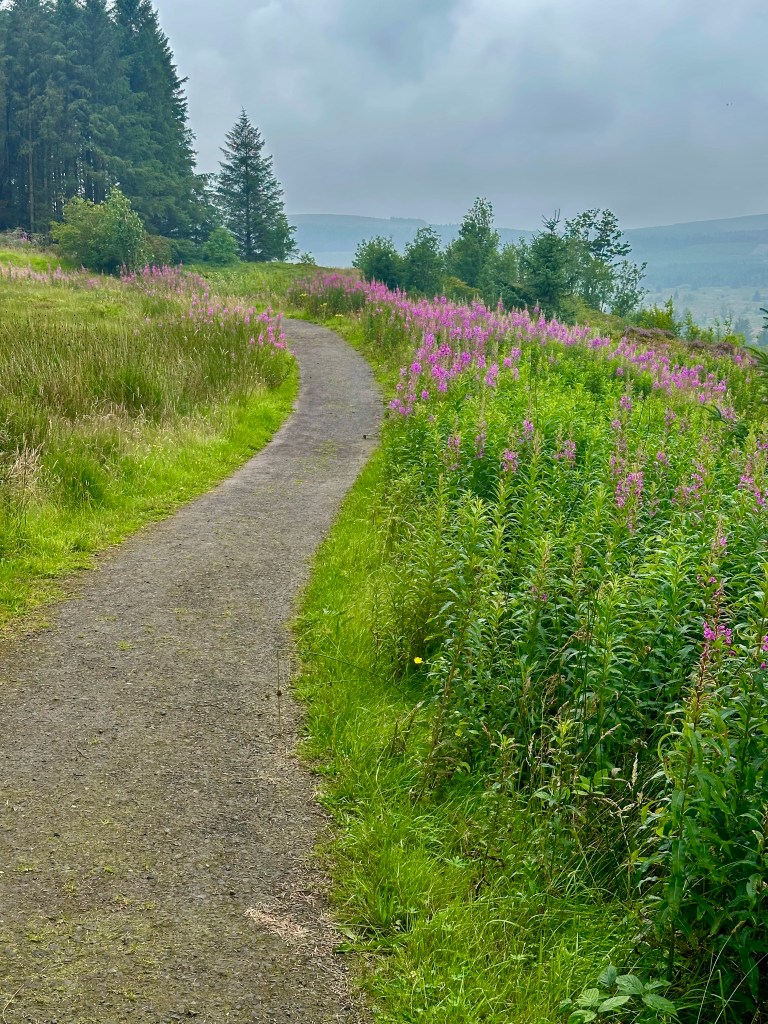
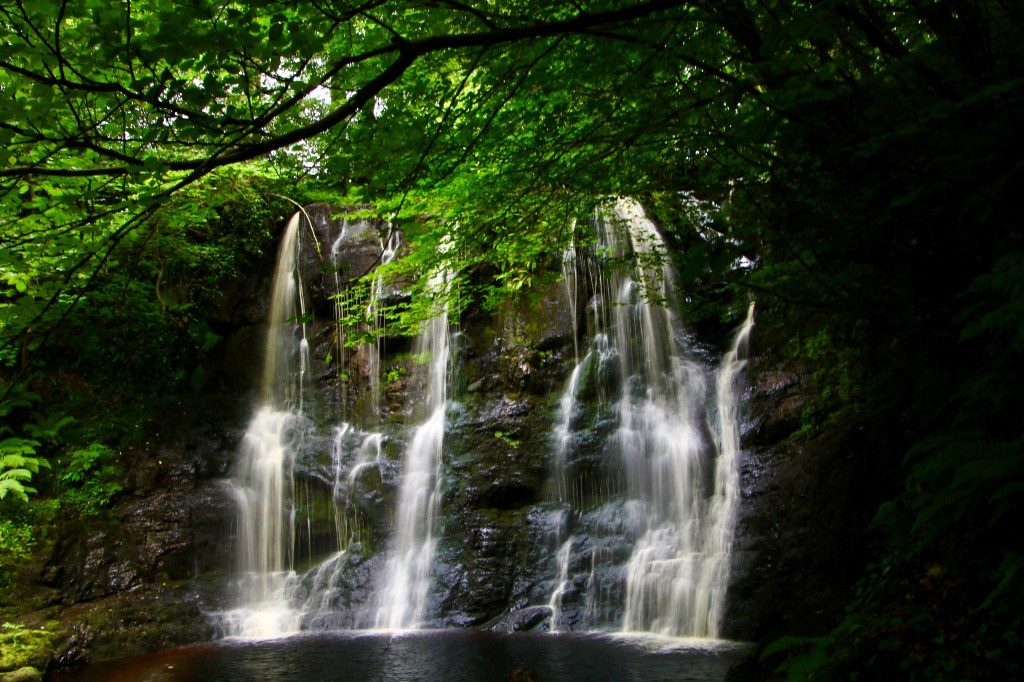
The following are from a beautiful hike along a trail at Glenariff Waterfalls and Forest Park

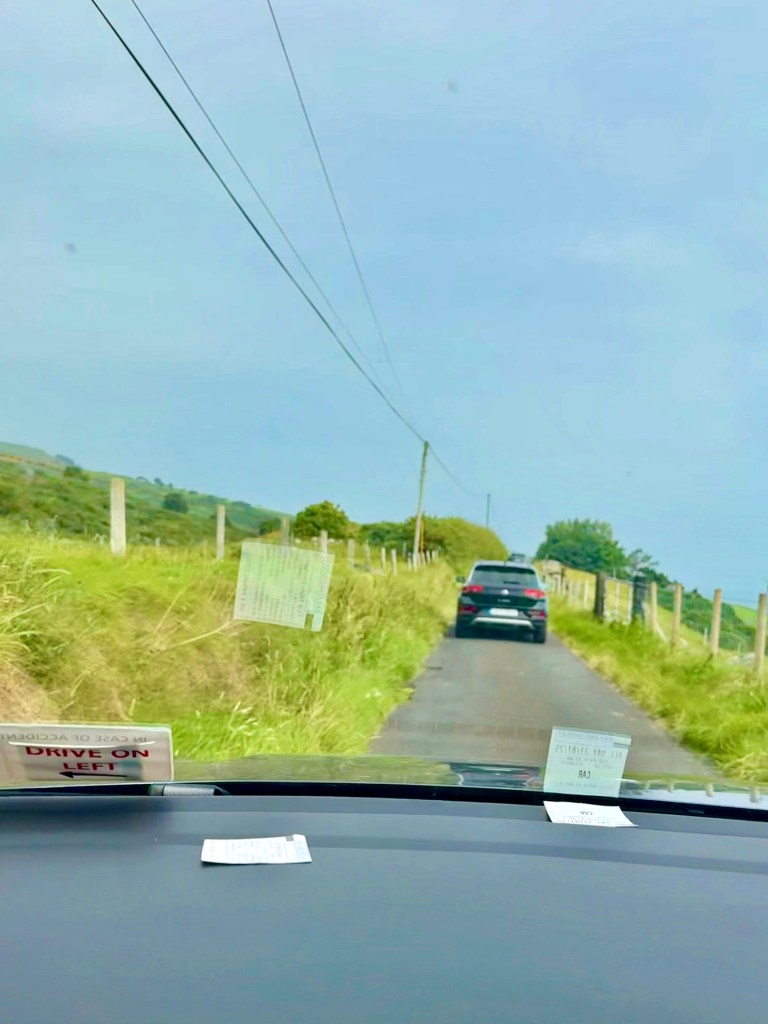
One of the “two-lane” roads to Portrush.

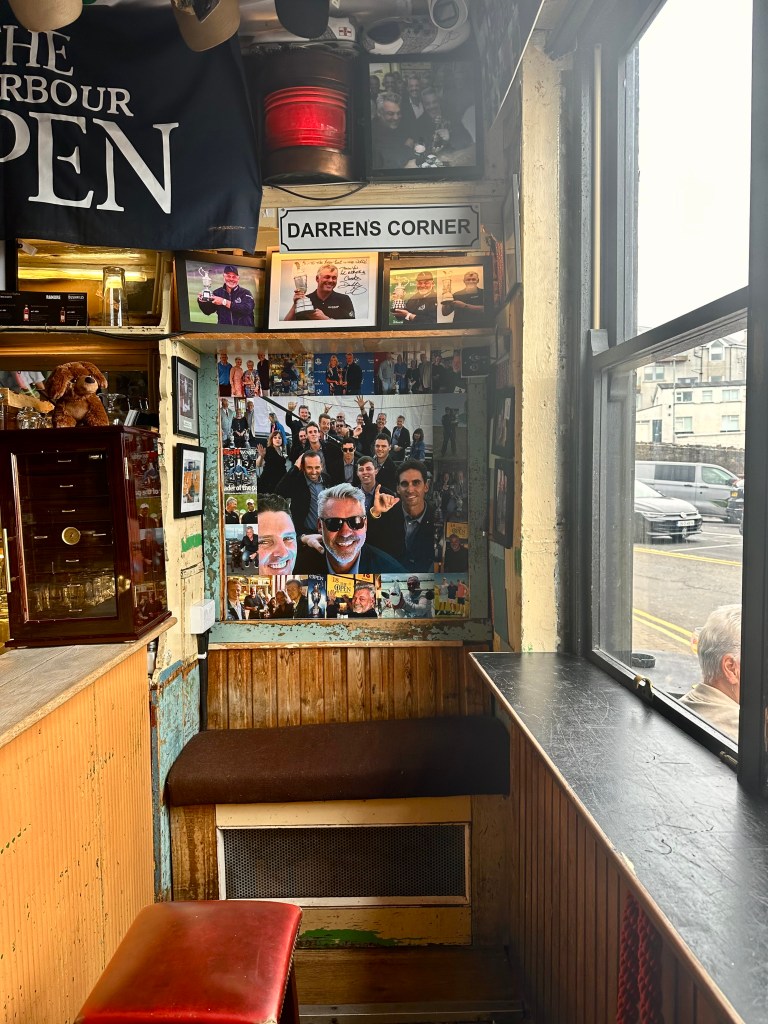
I found Darren’s Corner at Harbour Bar in Portrush, in honor of Darren Clarke who won The Open Championship. Clarke is a fellow County Tyronian.

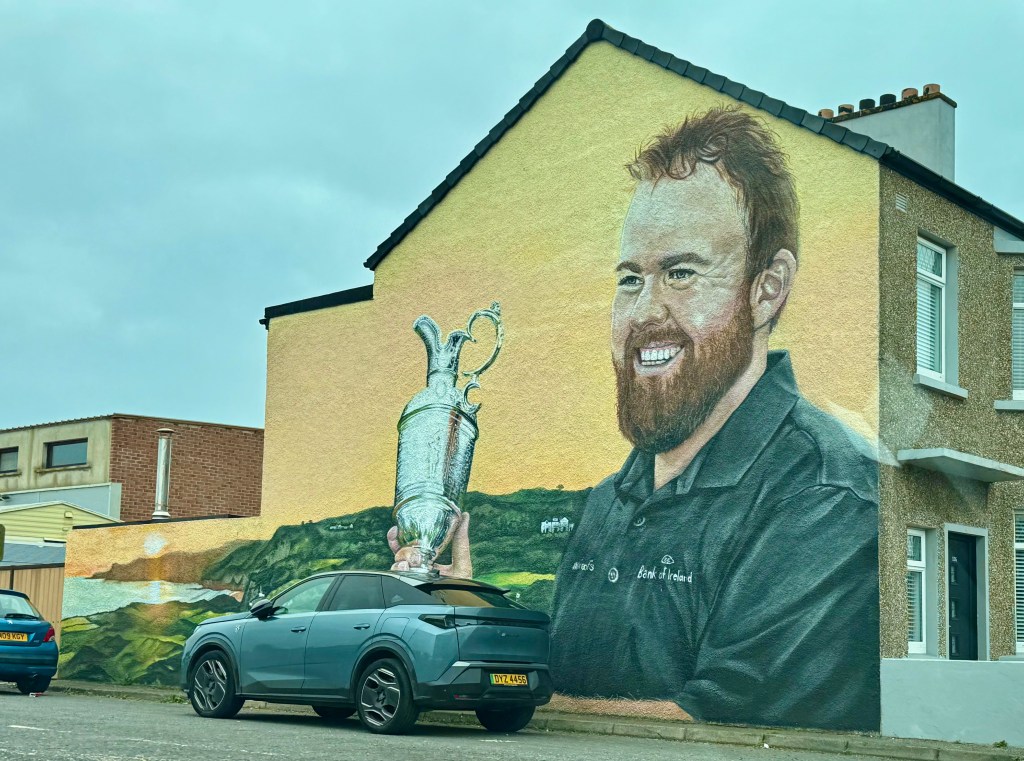
Golf is pretty important in Portrush especially for the winners of the Open. This is a mural of Shane Lowry from Ireland, not from Northern Ireland. I guess golf is the great unifier.

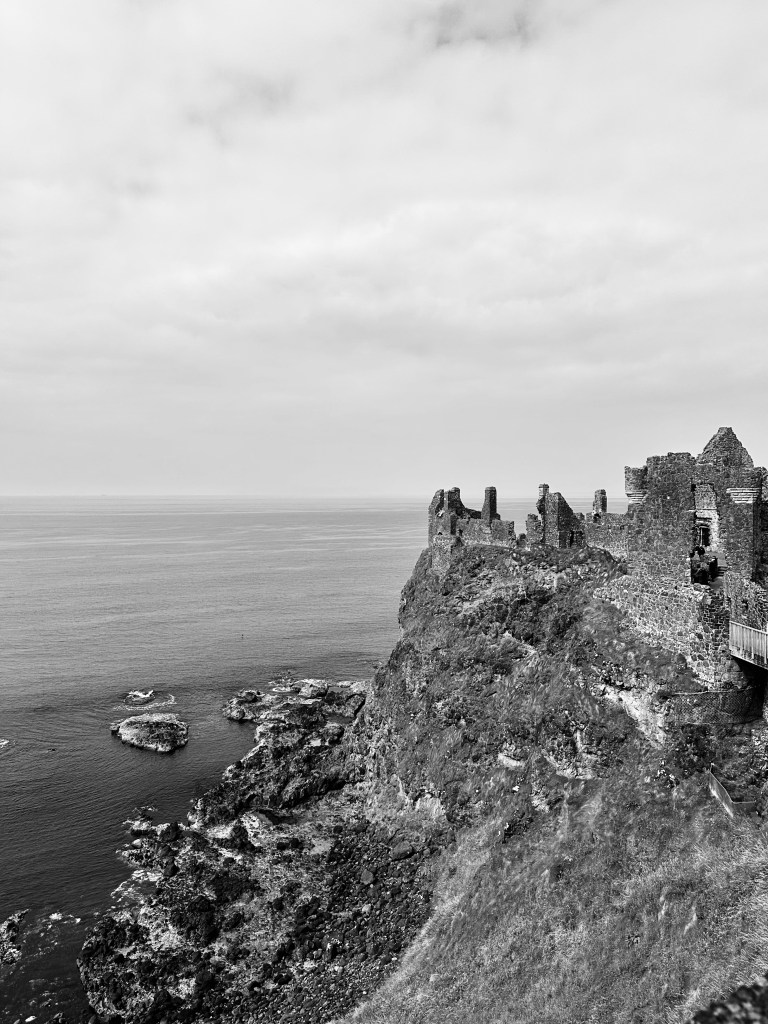
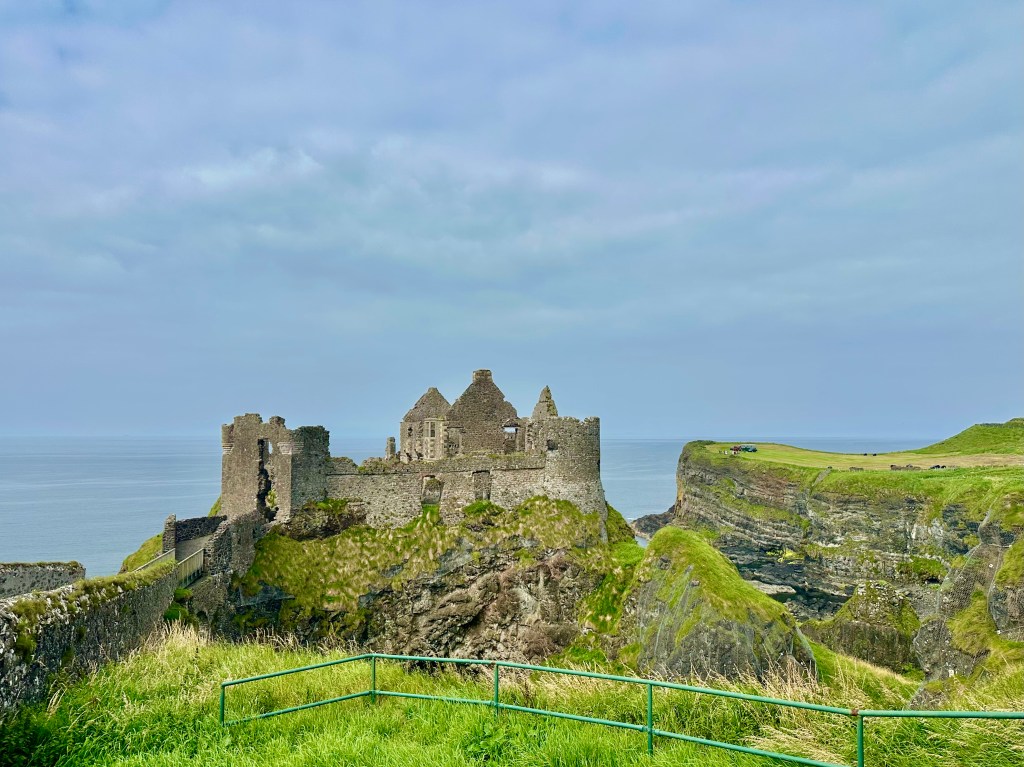
We drove back up the coast back to Glenariff and found Dunluce Castle

You can find many ruins from olden days in Northern Ireland.

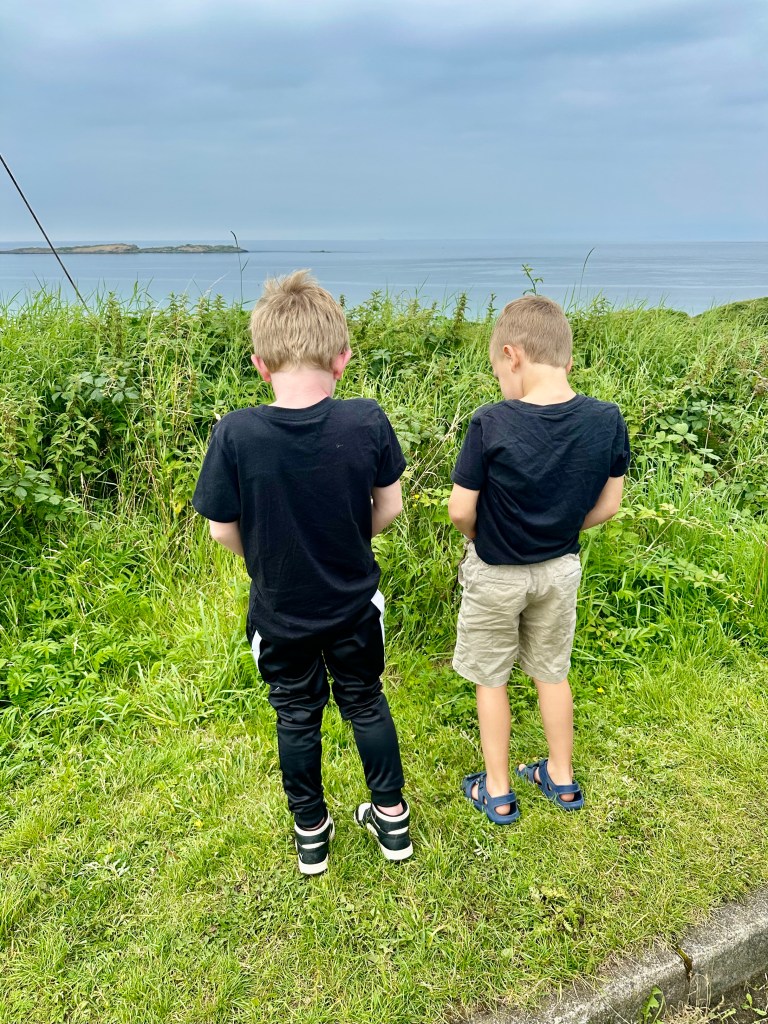
My grandsons, a proud moment for their granddad.. They just wanted one more look at the Irish Sea.

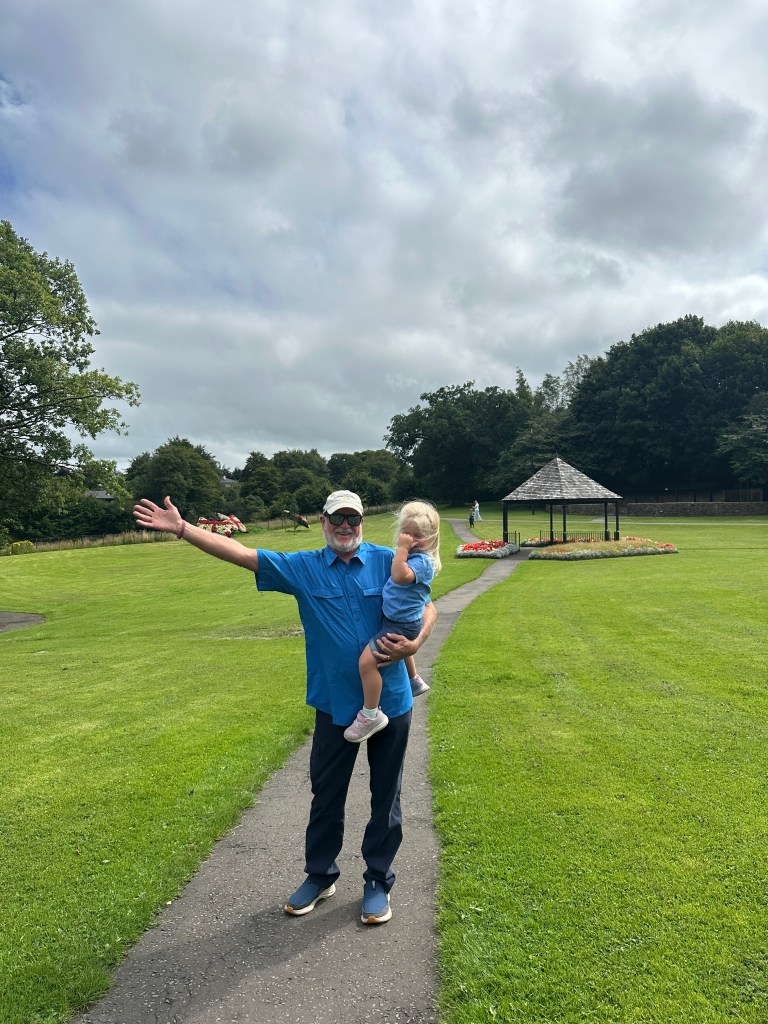
I did make it to County Tyrone and visited the beautiful Dungannon Park. My dad, who researched all the family history always dreamed of seeing County Tyrone. I am wearing his hat.